
ISO 42001 Certification: Audit Evidence and Readiness Gaps
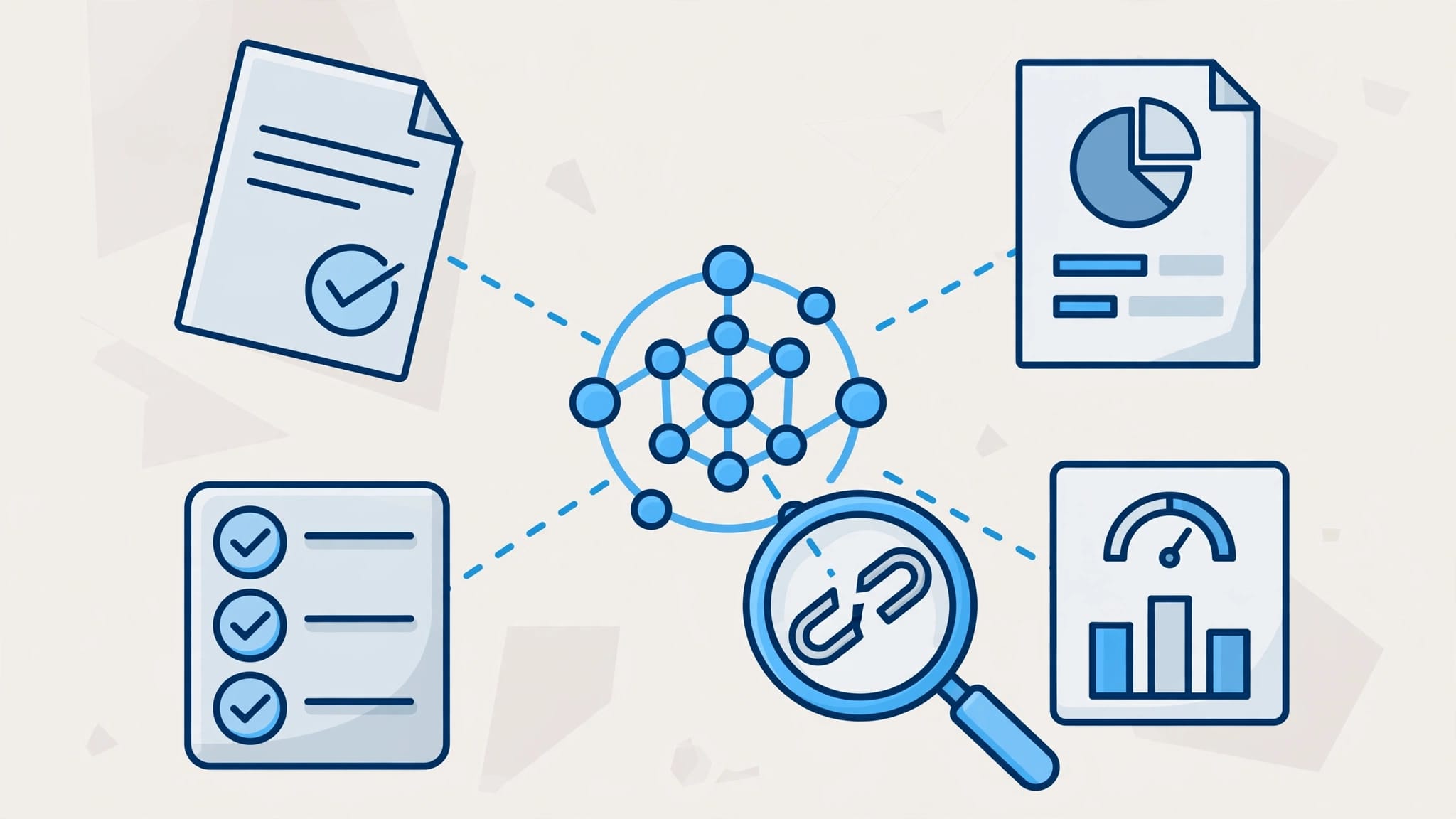
ISO 42001 certification requires evidence that your organisation governs AI consistently, with accountable decisions and effective controls. Auditors examine how your artificial intelligence management system (AIMS) operates, including how you assess risks and respond when systems change.
The main readiness gap is often traceability: policies exist, but approvals, assessments and operational records don't connect. Preparation should therefore follow the evidence an auditor needs to see.
Key takeaways
Certification covers your AIMS within a defined scope, not the safety or accuracy of every AI system.
Auditors assess clauses 4 to 10, applicable controls and evidence of effective implementation.
Risk assessments, impact assessments, internal audits and management reviews must support operational decisions.
Certification starts a continuing surveillance and improvement cycle.
Understand what ISO 42001 certification covers
ISO/IEC 42001:2023 is the world's first certifiable international AI management system standard. It specifies requirements for establishing, implementing, maintaining and continually improving an AIMS.
It applies to organisations developing, providing or using AI, including third-party services. Certification is voluntary, although customers can make it a contractual requirement.
ISO 42001 shares the high-level management-system structure used by ISO 9001 and ISO 27001. ISO/IEC 42001:2023 also follows Plan-Do-Check-Act: establish governance, operate it, evaluate performance and improve.
However, certification doesn't approve individual AI products or establish compliance with legislation such as the EU AI Act. Legal obligations need separate assessment.
1. Establish scope and leadership under clauses 4 and 5
Define the boundary auditors will examine
Clause 4 requires an understanding of organisational context, interested parties and the AIMS scope. Identify relevant business activities, AI systems, suppliers and organisational responsibilities.
Include embedded AI features and externally hosted services, not only internally developed models. Otherwise, the scope can overlook AI influencing business decisions.
A gap analysis should compare existing arrangements against the standard and assign owners, priorities and completion dates. Our AI governance guidance explains how these responsibilities fit together.
The AIMS can sit within the wider compliance program. Certification confirms conformity with ISO 42001, not compliance with every applicable law.
Demonstrate management ownership
Under clause 5, top management must establish the AI policy, allocate resources and assign responsibilities. The organisation must communicate that policy to relevant personnel. Clear AI governance links assigned responsibilities to executive decisions and escalation.
Auditors will seek evidence that leadership resolves governance issues rather than simply signing documents. Budget decisions, assigned authorities and escalation records help demonstrate involvement.
A vCISO can coordinate governance activities, but executive accountability remains with the organisation's leadership.
2. Assess AI risks and impacts under clause 6
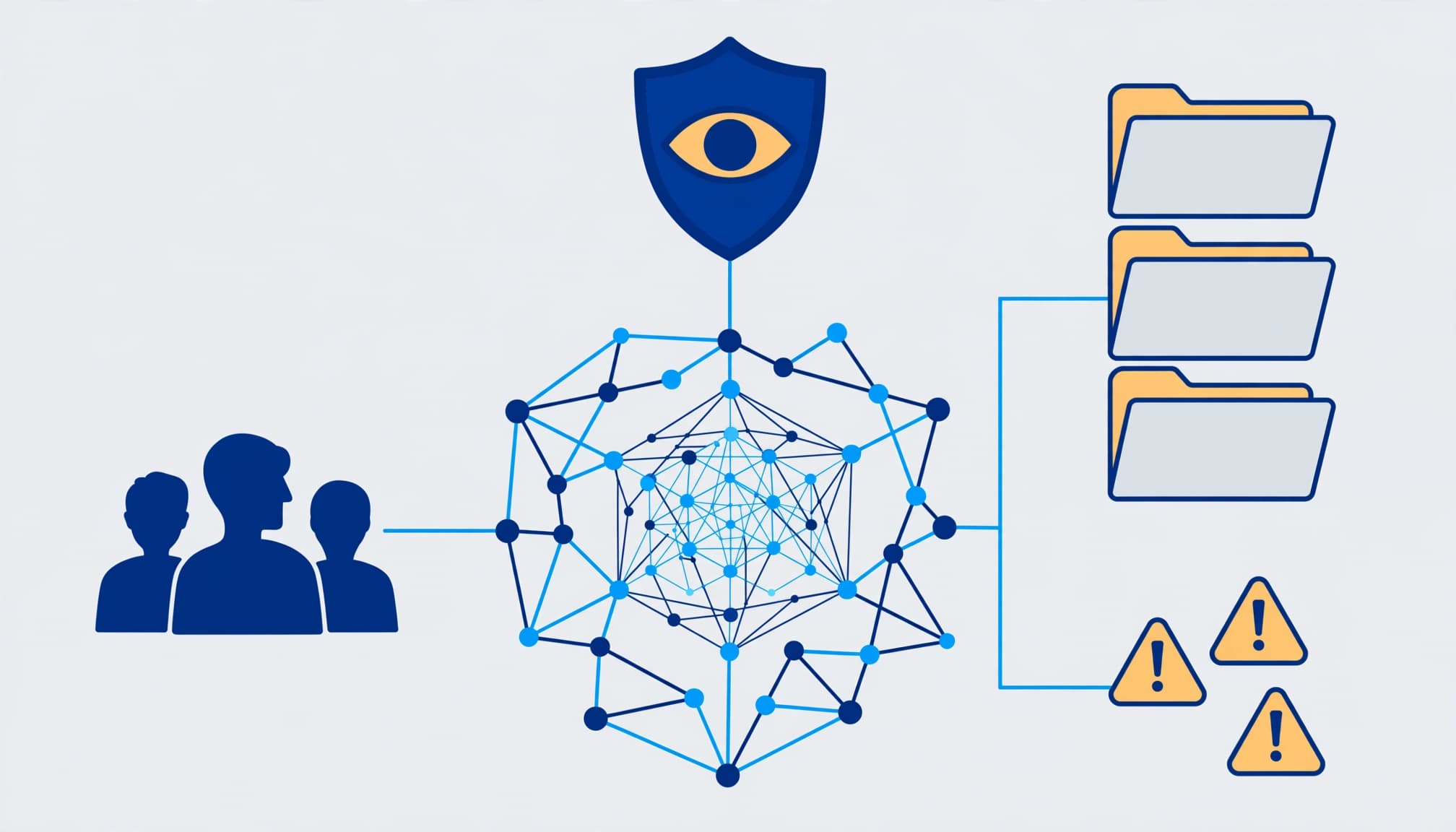
The State of Trust Report for 2024 reported that only 37% of organisations conducted, or were introducing, regular AI risk assessments.
Make risk decisions repeatable
Clause 6.1.2 addresses AI risk assessment. Define consistent likelihood, consequence and acceptance criteria, then connect each risk to a system, activity or dependency.
Assess unreliable outputs, data quality, security weaknesses and supplier changes. Record treatment decisions and accountable owners, and document who authorised acceptance of residual risk. Together, these steps create a consistent risk management process.
NIST's AI Risk Management Framework can inform your method, but ISO 42001 doesn't mandate it. Auditors need a method your organisation applies consistently.
Assess effects on people and society
Clause 6.1.4 requires a separate AI system impact assessment. Its results feed into the AI risk assessment and treatment decisions.
Examine affected individuals and groups, potential discrimination, privacy intrusion, accessibility barriers and foreseeable misuse. Record safeguards, uncertainty, approval and reassessment triggers.
For AI-assisted recruitment, overall accuracy alone cannot establish fair treatment across applicant groups. Assessments need evidence relevant to the people affected.
A low financial risk to your organisation can coexist with a serious adverse impact on individuals.
3. Implement controls and retain evidence under clauses 7 and 8
Justify control selection
Annex A controls include 38 reference controls covering governance, lifecycle management, data and responsible use. Organisations select the controls they need through risk treatment.
The Statement of Applicability should record control applicability, implementation status and reasons for inclusion or exclusion. Additional controls may be necessary.
The standard's requirements and Annex A provide the reference point. Copying another organisation's applicability decisions doesn't demonstrate that your own risks have informed control selection.
Show controls operating
Clause 7 covers resources, competence, awareness, communication and documented information. Clause 8 requires operational planning and control, including assessments and risk treatment.
Useful evidence includes model-version records, evaluation results, deployment approvals, supplier reviews and monitoring responses. Each record should identify the responsible person and resulting decision.
Existing ISO 27001 training supports security competence. However, AI owners also need role-specific understanding of impacts, oversight and escalation.
4. Test effectiveness through internal audit and management review
Keep internal audit impartial
Clause 9.2 requires internal audits at planned intervals. Use competent external auditors or internal personnel independent of the activities they audit. Nobody should audit their own work.
Sample operational evidence rather than checking document titles alone. Trace a deployed system through assessment, approval, monitoring and subsequent changes.
Retain the audit programme, scope, findings and supporting evidence. Experience in ISO 27001 auditing helps, but auditors also need sufficient AI management competence.
Make management review decision-focused
Clause 9.3 requires a scheduled formal review by leadership at planned intervals. Present audit results alongside performance measures, incidents, stakeholder feedback and changes affecting the AIMS.
Leadership's evaluation should produce decisions about improvement, resources and necessary changes. Minutes that only state "discussed" provide weak evidence.
Internal audit assesses conformity and effectiveness. Leadership review then gives leaders the information they need to direct the system.
5. Complete the external audit and maintain certification

Prepare for Stage 1 and Stage 2
The initial external audit has two stages. Stage 1 examines documented arrangements and readiness. Stage 2 evaluates implementation and effectiveness through records, interviews and sampled activities.
Select a certification body accredited for ISO/IEC 42001, then verify its accreditation scope covers the service.
The requirements for certification bodies address competence, consistency and impartiality. The certification body, rather than ISO or your implementation consultant, makes the certification decision.
Plan evidence, costs and surveillance
Allow at least three months as a preparation allowance, not an ISO-mandated minimum. Records must show meaningful operation, including a completed in-house assurance audit programme and leadership's documented evaluation.
Certificates typically follow a three-year certification lifecycle. ISO 42001 surveillance audits take place in the first and second years, with recertification before expiry.
There is no universal certification fee or audit duration. Scope, complexity, sites and existing maturity affect audit effort. Budget for implementation, staff time, training, certification audits and ongoing surveillance.
Existing ISO 27001 consultancy work may reduce duplicated management-system development. Similarly, TISAX training and auditing experience can support established assurance practices. Neither TISAX nor CMMC replaces AI-specific assessment.
6. Close readiness gaps through clause 10 corrective action
The strongest gap assessment identifies missing evidence, not merely missing documents.
Clause | Common readiness gap | Evidence needed |
4 | Scope overlooks purchased AI services. | AI inventory and documented boundaries. |
5 | Policy exists without accountable owners. | Assigned authorities and leadership decisions. |
6 | Risk ratings lack impact assessment input. | Linked assessments and treatment approvals. |
7 | Training records don't demonstrate competence. | Role requirements and competence evaluations. |
8 | Procedures don't match actual operation. | Approvals, monitoring records and supplier reviews. |
9 | Audits review paperwork only. | Operational samples and management decisions. |
10 | Findings close without effectiveness testing. | Root cause, corrective action and follow-up results. |
These gaps usually require better decision-making and evidence ownership, rather than additional templates.
Under clause 10, both major and minor nonconformities require an appropriate response. Correct the immediate issue, investigate its root cause and implement corrective action. Follow-up checks should confirm the action prevents recurrence and supports continual improvement of the AIMS.
Major findings normally need resolution before certification. Minor findings also require an accepted response and follow-up; they aren't optional improvements.
Distinguish organisation certification from auditor credentials
An organisation's ISO 42001 certificate and an individual's lead auditor qualification are different credentials. Passing an examination doesn't certify an employer's AIMS.
GAQM's ISO/IEC 42001 Certified Lead Auditor exam has 40 multiple-choice questions, a one-hour limit and a 70% pass mark, meaning 28 correct answers. Its voucher includes two attempts. These are provider-specific examination rules, not universal ISO requirements.
Lead auditor methodology references ISO 19011 auditing guidance and ISO/IEC 17021-1 certification-body requirements. Passing the exam alone doesn't demonstrate practical audit competence.
The same distinction applies to TISAX consultancy support and independent assessment: implementation assistance doesn't confer authority to issue an organisation's assurance outcome.
Frequently asked questions
Does buying third-party AI remove our responsibilities?
No. Your responsibilities depend on your role, control and intended use. Retain evidence of supplier assurance, approved deployment conditions and oversight. A supplier's certificate doesn't establish that your own use is appropriate.
Can we reuse our existing information security management system?
Yes. Document control, the organisation's independent audit process, management review and corrective action can support both systems. However, AI impact assessment and AI-specific control decisions still need dedicated attention.
What should be ready before Stage 2?
Prepare the scope, policy, assessments, Statement of Applicability and operational evidence. Include internal assurance findings, leadership's documented decisions and corrective actions. Records should demonstrate implementation, not only planned activity.
Build readiness around traceable decisions
Successful ISO 42001 certification depends on connected evidence: assessed impacts, justified controls and accountable decisions that remain current as AI changes.
Start with a scoped gap assessment and prioritise weaknesses that prevent auditors tracing decisions through actual operations.
If you would like to find out more information or require any of our services please Contact Us and complete the contact form.